
Leveraging AI Automation to Scale Your Small Business
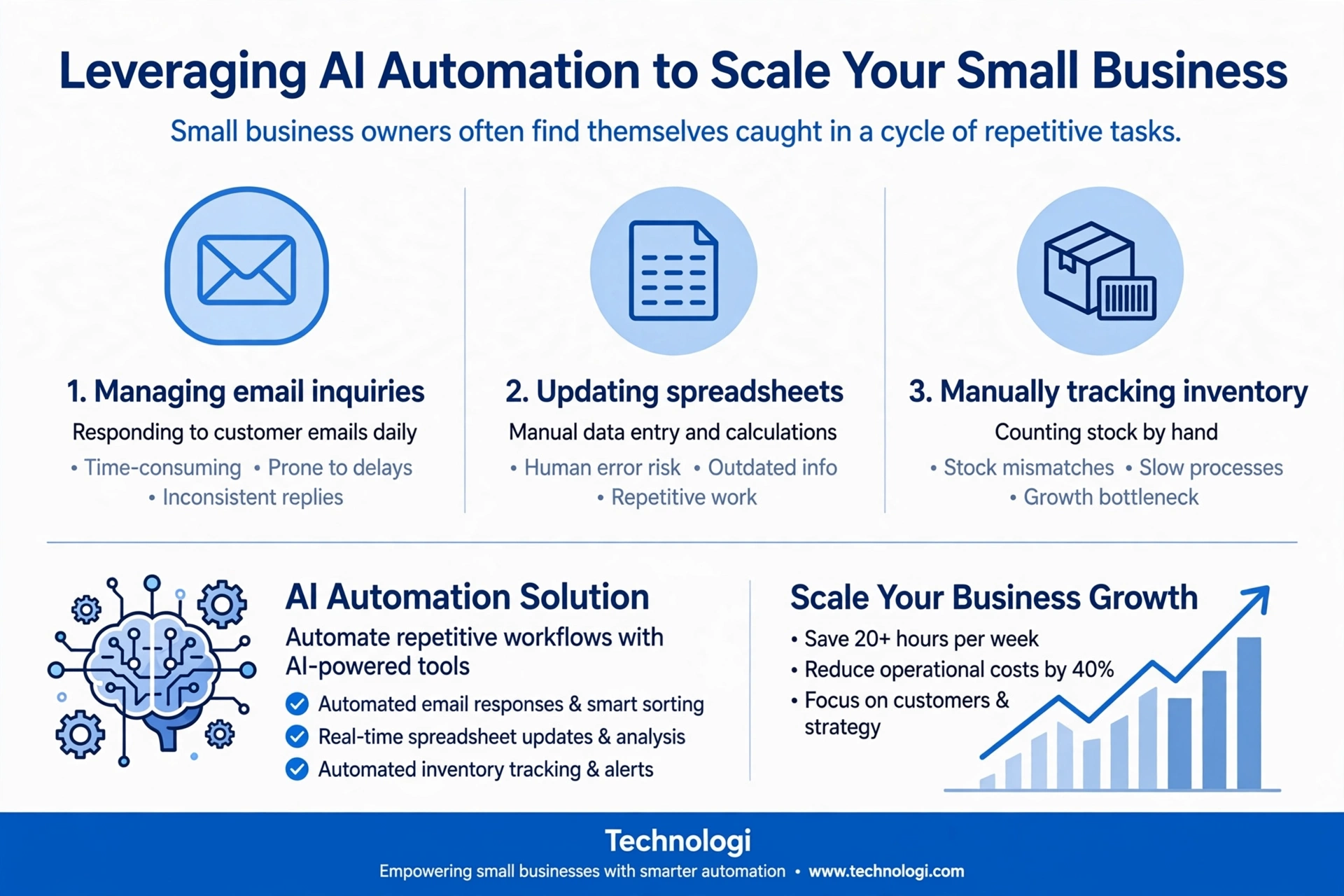
Small business owners often find themselves caught in a cycle of repetitive tasks. Whether it is managing email inquiries, updating spreadsheets, or manually tracking inventory, these activities consume time that could be better spent on high-level strategy. As your business grows, the manual effort required to keep things running often becomes a bottleneck that prevents true scalability.
Thank you for reading this post, don't forget to subscribe!The solution lies in shifting your mindset toward technological integration. Leveraging AI automation allows you to transition from working in your business to working on your business. By delegating routine processes to intelligent software, you create the operational capacity needed to handle increased demand without necessarily increasing your headcount.
Understanding the Role of AI in Small Operations
Artificial Intelligence is no longer reserved for large corporations with massive technology budgets. Today, a wide range of accessible tools allows small businesses to automate complex workflows effectively. The goal is not to replace human judgment, but to augment your capabilities by handling data-heavy or time-consuming tasks.
The Difference Between Traditional Automation and AI
Traditional automation follows rigid, rule-based logic. If a specific event happens, the system executes a pre-defined command. While useful, it lacks flexibility. AI, by contrast, can interpret unstructured data, recognize patterns, and make adjustments based on new information.
When you use AI, you are introducing a system that can learn over time. This makes it an ideal partner for scaling, as it can handle nuanced tasks like categorizing customer feedback or predicting inventory needs based on seasonal trends. Leveraging AI in this manner provides a layer of intelligence that static tools simply cannot match.
Identifying Operational Bottlenecks
Before implementing any new technology, you must identify where your time is being lost. Start by auditing your daily tasks. Are you spending hours copy-pasting data between applications? Are you manually responding to the same customer questions repeatedly?
Focus on tasks that are high-volume, low-complexity, and prone to human error. These are the prime candidates for automation. Once you identify these areas, you can begin to research tools that integrate with your existing software stack to create a seamless flow of data across your organization.
Key Areas for Implementing Automation
Scalability is largely about efficiency. When your systems can handle more volume without requiring extra time from you, you have successfully scaled. Several departments within a small business are particularly well-suited for AI-driven improvements.
Streamlining Customer Communication
Customer support is often the first area to suffer when a business grows. AI-powered chatbots and automated ticketing systems can manage initial inquiries by providing instant answers to common questions. This ensures that your customers receive a timely response regardless of the time of day.
By leveraging AI to handle the first tier of support, you allow your team to focus on more complex, high-value interactions. This creates a better customer experience while significantly reducing the load on your support staff. The key is to ensure the automation feels helpful and human-centric rather than cold and robotic.
Optimizing Marketing and Content Production
Marketing is essential for growth, but it is also time-intensive. AI tools can assist with everything from drafting social media posts to analyzing which email subject lines perform best with your audience. You can automate the scheduling of content across multiple platforms, ensuring a consistent brand presence.
Furthermore, AI can help with data analysis. Instead of manually reviewing campaign results, you can use automated reports to identify trends. This allows you to pivot quickly and invest your marketing budget where it will have the most impact, rather than guessing what might work.
Automating Financial and Administrative Tasks
Back-office tasks are often the least rewarding but most necessary parts of running a business. Automated bookkeeping software can now categorize expenses and reconcile accounts with minimal human intervention. This reduces the risk of manual entry errors and keeps your financial records audit-ready at all times.
Similarly, administrative tasks like scheduling meetings, organizing files, and tracking project deadlines can be handled by AI assistants. By automating these background processes, you free up mental bandwidth to focus on the creative and strategic decisions that only you can make.
Best Practices for Successful Adoption
Implementing new technology is a process, not a one-time event. To avoid overwhelming yourself or your staff, it is important to take a measured approach. Start small, test your results, and iterate based on what you learn.
Start with a Single Workflow
Do not try to automate every aspect of your business at once. Choose one specific, painful workflow and solve that first. Once you have successfully implemented an AI tool in that area, you will gain confidence and a better understanding of how these tools integrate with your existing operations.
This incremental approach also allows you to troubleshoot issues as they arise without jeopardizing your entire operation. By focusing on one area, you can measure the return on investment more clearly, which justifies the time spent on setup and training.
Maintain the Human Touch
Automation should serve your customers and your team, not distance them. Always review automated outputs, especially in customer-facing roles. AI can draft an email or suggest a response, but a human should always verify that the tone and content align with your brand values.
Your goal is to use technology to enhance human connection, not replace it. Use the time saved through automation to offer more personalized service to your most important clients or to engage in deeper creative work. Your customers will appreciate the efficiency, but they will stay for the personalized attention.
Prioritize Data Privacy and Security
As you integrate more AI tools into your business, you will likely be handling more data through third-party platforms. Always prioritize security. Choose tools that offer robust encryption, adhere to data privacy regulations, and have a clear policy on how they use the information you provide.
Be cautious about sharing proprietary business data or sensitive customer information with AI tools that might use that data to train their models. Take the time to understand the privacy settings of every tool you adopt to ensure that your business and your customers remain protected.
Evaluating the Long-Term Impact
The true value of automation is found in the long-term sustainability of your business. When you have systems that run independently, your business becomes more resilient. You are no longer the single point of failure for every administrative or operational task.
Regularly review your automated workflows to ensure they are still serving your needs. As your business changes, your processes should evolve as well. An automation that worked for a team of two may need adjustment when you grow to a team of ten. By treating your automation stack as a living part of your business, you ensure it remains an asset rather than a liability.
Conclusion
Scaling a small business is a challenging endeavor that requires a focus on efficiency and strategic growth. By leveraging AI automation, you can remove the barriers that prevent you from reaching the next level. You gain the ability to handle more volume, improve the consistency of your output, and provide a higher level of service to your customers.
Remember that the objective is to simplify your operations so that you can focus on the core value you provide to your market. Start by identifying one area for improvement, choose the right tools, and implement them with a focus on both efficiency and human connection. With the right approach, AI-driven automation will become the engine that powers your business growth for years to come.
Tags: ai, ai automation, technology, workflow automation